
The following platforms have been recognized as the best commission-free stock trading apps of 2025. Each caters to different types of investors, offering unique features, investment opportunities, and tools to suit various needs.

1. Robinhood
Why it stands out: Robinhood is one of the original zero-commission trading platforms, designed for streamlined and beginner-friendly trading. The app is intuitive and easy to use, making it ideal for new investors or those who want a no-fuss experience.
Features:
- Commission-free trading for stocks, ETFs, and options.
- Access to fractional shares, IPOs, and cryptocurrencies (availability depends on location).
- $0 minimum deposit to open an account or start investing.
- Educational resources such as the “Investing Basics” blog and the Robinhood Snacks newsletter.
Pros: - No account minimum required.
- Free stock welcome bonus for new users.
- Variety of investment options for active traders.
Cons: - Limited investment options (e.g., no mutual funds or bonds).
- Users must rely on their own knowledge when building portfolios.
2. Ally Invest
Why it stands out: Ally Invest is perfect for those looking to combine banking and investing seamlessly. It offers both self-directed trading and managed portfolios, making it suitable for both hands-on investors and those who prefer automation.
Features:
- Zero commission fees for stock, ETF, and options trades.
- Investment options include stocks, bonds, ETFs, options, mutual funds, margin accounts, and forex trading.
- No account minimum for self-directed trading.
- Robo Portfolios (managed portfolios) with a $100 minimum deposit and no advisory fees.
- Informational articles and calculators to help users improve their understanding of investment strategies.
Pros: - 24/7 live customer service with brokers.
- No commission fees for eligible trades.
- Robo Portfolios available with four portfolio types to choose from.
Cons: - Robo Portfolios require a $100 minimum deposit.
- Some mutual funds may require transaction fees.
3. Charles Schwab
Why it stands out: Charles Schwab is known for its extensive offerings and tools for both novice and experienced investors. Its fractional share program, “Schwab Stock Slices,” allows investors to buy portions of S&P 500 companies for as little as $5.
Features:
- Zero commission fees for stock and ETF trades.
- No-transaction-fee mutual funds available.
- Access to stocks, bonds, mutual funds, CDs, and ETFs.
- Comprehensive retirement planning tools and personalized portfolio-building features.
- Award-winning thinkorswim® trading platforms for advanced traders.
Pros: - No account minimum for active investing.
- 24/7 customer support and over 300 physical branches for in-person assistance.
- Extensive market research and real-time news from sources like Morningstar and Credit Suisse.
Cons: - Automated investing requires a $5,000 minimum deposit.
- Premium robo-advisor services come with additional fees.
4. E-Trade
Why it stands out: E-Trade is a strong choice for investors who value education. It provides a wide range of online resources, including retirement and tax-planning guides, market analysis, and on-demand webinars.
Features:
- Zero commission fees for stock, ETF, and options trades.
- Investment options include stocks, bonds, mutual funds, CDs, ETFs, options, and futures.
- Automated investing through Core Portfolios with a $500 minimum deposit and a 0.30% annual advisory fee.
- Power E-Trade platform for advanced analysis and trading tools.
Pros: - No transaction fees for over 4,400 mutual funds.
- Discounts for active traders on options contracts.
- Strong mobile platform with customizable watchlists.
Cons: - No fractional shares or cryptocurrency options.
- Robo-advisor Core Portfolios requires a $500 minimum deposit.
5. J.P. Morgan Self-Directed Investing
Why it stands out: This platform is one of the few that offers commission-free online mutual fund trading, making it a great option for investors who prioritize mutual funds. It also has an intuitive interface that’s beginner-friendly.
Features:
- No minimum deposit or balance required.
- Investment options include stocks, ETFs, mutual funds, options, and fixed-income products.
- Enhanced stock screener to filter investments by criteria like sector and market cap.
Pros: - Fractional shares available for as little as $5.
- Easy-to-use platform for new investors.
Cons: - Limited advanced tools for experienced traders.
6. Fidelity Investments
Why it stands out: Fidelity is renowned for its excellent customer service and comprehensive research tools. It caters to both beginners and experienced investors with its wide range of offerings.
Features:
- Zero commission fees for stock, ETF, and options trades.
- Access to over 3,400 mutual funds with no transaction fees.
- Fractional shares available for as little as $1.
- Robo-advisor Fidelity Go® with no advisory fees for balances under $25,000.
- Educational tools and research from over 20 independent providers.
Pros: - No account minimum required.
- 24/7 customer support and over 100 physical branches for in-person assistance.
- Special offers and promotions for new users.
Cons: - Fidelity Go® charges a 0.35% advisory fee for balances over $25,000.
- Some mutual funds have specific thresholds or fees.
7. Vanguard
Why it stands out: Vanguard is ideal for long-term investors who prioritize low-cost funds and straightforward investing. It automatically invests unutilized funds into a money market fund, providing better returns than competitors’ default options.
Features:
- Zero commission fees for stock and ETF trades.
- Investment options include stocks, bonds, mutual funds, CDs, ETFs, and options.
- Robo-advisor Vanguard Digital Advisor® with a 90-day free trial.
- Retirement planning tools and access to Vanguard Personal Advisor Services® for personalized guidance.
Pros: - No minimum to open an account.
- Large selection of ETFs and mutual funds with low expense ratios.
- Excellent customer service and human-to-human support.
Cons: - $20 annual service fee for IRAs and brokerage accounts (waivable with paperless statements).
- Basic trading platform with limited advanced tools.
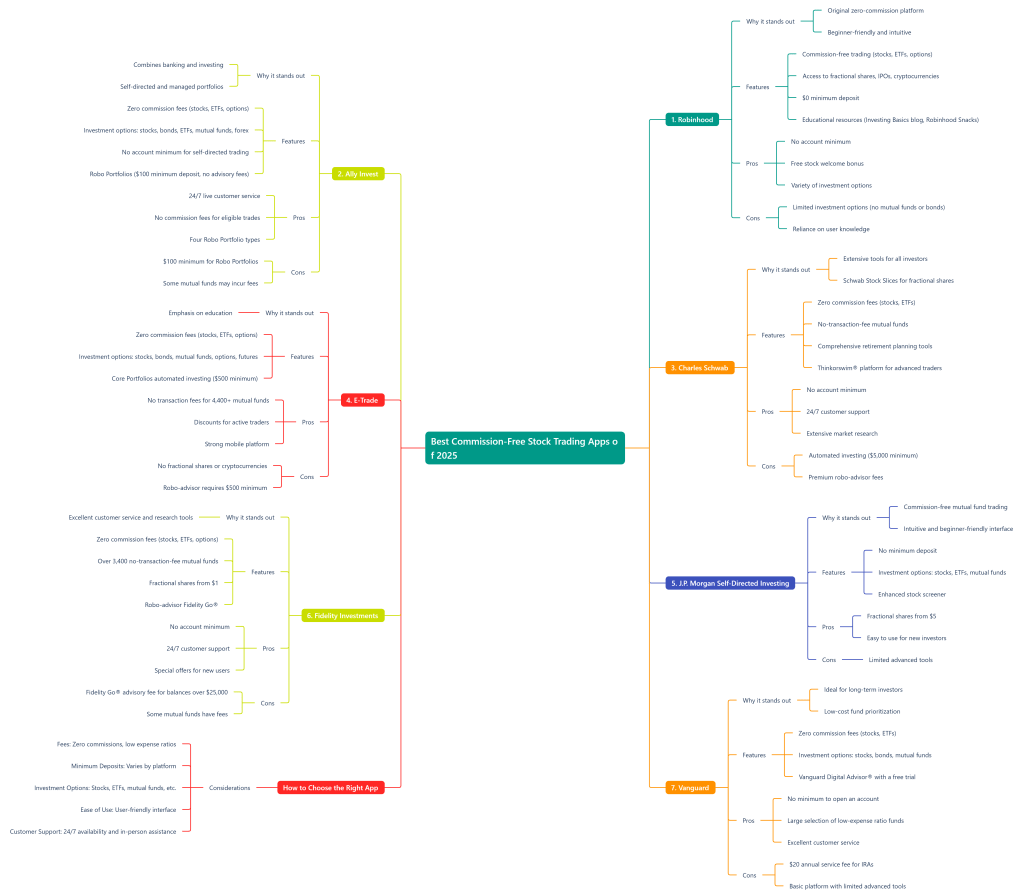
How to Choose the Right App
When selecting a commission free stock trading platform/app, consider the following factors:
- Fees: Look for platforms with zero commissions and low expense ratios.
- Minimum Deposits: Some platforms require no minimum, while others may require a deposit for specific services.
- Investment Options: Ensure the app offers the types of investments you’re interested in, such as stocks, ETFs, mutual funds, or cryptocurrencies.
- Ease of Use: Choose an app with a user-friendly interface that matches your level of experience.
- Customer Support: Platforms with 24/7 support or in-person branches can be helpful.
These commission free trading apps cater to a wide range of investors, from beginners to seasoned traders, ensuring there’s an option for everyone. Let me know if you’d like more details about any specific platform!




 Cryptonic Tech Blog
Leave a comment